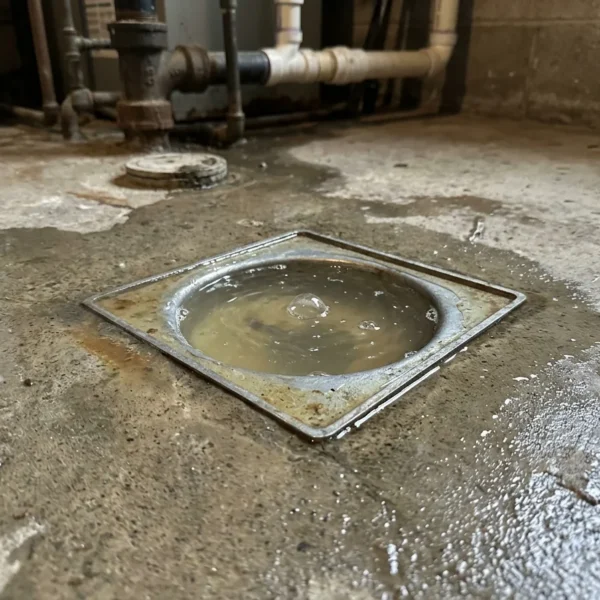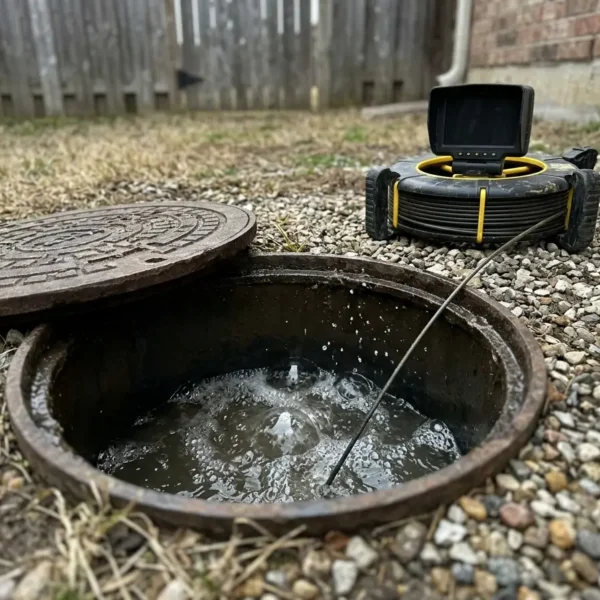
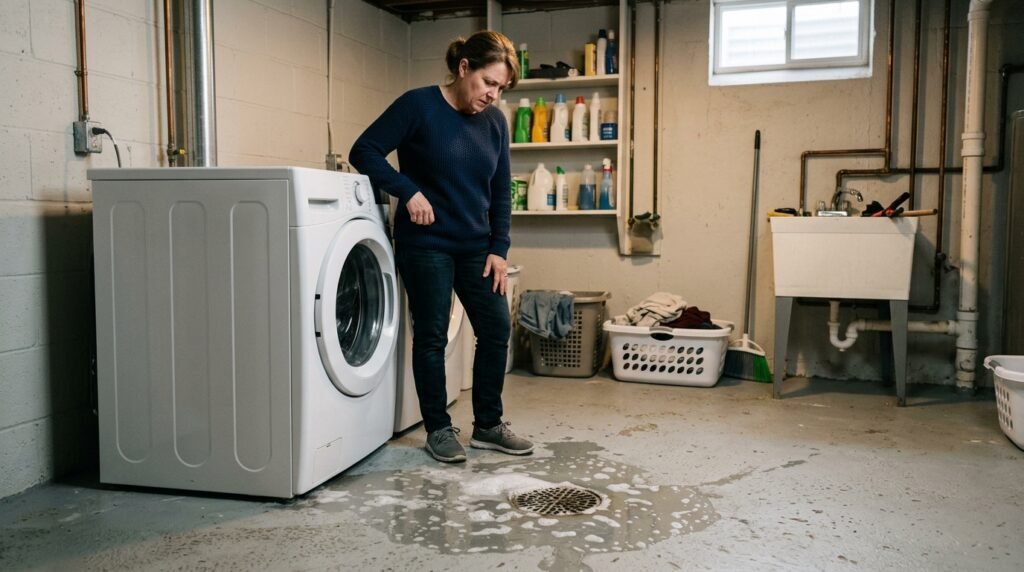
If your main sewer line keeps clogging after it was cleaned, the first cleaning may have opened the blockage without removing the cause behind it. Roots can grow back, grease and scale can remain on pipe walls, or a damaged section of pipe can keep catching waste. A sag, offset joint, crack, or partial collapse can also cause new blockages to form in the same place.
The next step should not always be another round of snaking. When a sewer line blockage keeps coming back, the line should be evaluated to find out why. In many cases, the useful path is simple: clear enough of the blockage to inspect the pipe, use a sewer camera to identify the cause, clean or descale the line when appropriate, and repair the pipe if a structural defect is responsible.
Why Can a Sewer Clog Come Back After Cleaning?
Sewer cleaning and sewer repair solve different problems. Cleaning removes material that is stopping or slowing wastewater. Repair corrects damage to the pipe itself.
That difference explains many repeat problems. A mechanical snake may cut through a mass of roots and restore flow, but the crack or loose joint that allowed the roots into the pipe can still be there. A cable may punch through thick buildup without removing all of the grease or scale around the inside wall. A blockage sitting in a low section may be cleared, while the low spot continues collecting waste.
So a sewer clog after cleaning does not automatically mean the cleaning failed. It may mean there is another condition inside the line that cleaning alone cannot correct.
Municipal sewer guidance also separates routine cleaning problems such as grease and roots from structural defects such as severe offsets, cracks, holes, and sagging pipe. Those defects can allow debris to collect and contribute to future backups.
Tree Roots Can Grow Back Into the Sewer Line
Tree roots are one of the first things to consider when a sewer keeps clogging after snaking, especially if roots were pulled back on the cable during the previous cleaning.
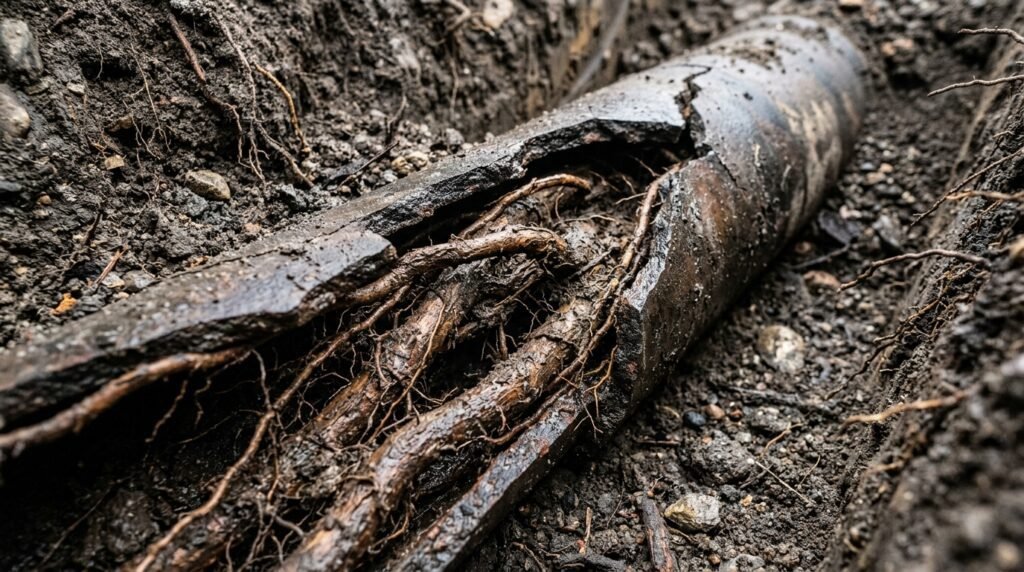
Roots do not normally enter an intact pipe simply because a tree is nearby. They take advantage of openings such as failed joints, cracks, or other weak points. Once roots reach the moisture and nutrients inside the sewer, they can continue growing and restrict the pipe.
Cutting those roots can restore wastewater flow, but it does not automatically close the opening through which they entered. If the pipe defect remains, new root growth can appear later. Seattle Public Utilities notes that roots are a common side-sewer problem and recommends inspection and cleaning when root intrusion becomes severe enough to interfere with the pipe.
This issue is relevant around Salt Lake City because trees and sewer infrastructure often share the same limited underground space. Salt Lake City’s Urban Forestry program even addresses situations where tree roots interact with sewer lines and does not generally consider tree removal alone to be the first solution.
The better question is not simply, “How do we remove the roots?” It is, “Why are the roots getting into this pipe?”
Grease and Sludge May Still Be Coating the Pipe
A drain snake and a thorough pipe cleaning are not always the same thing. A mechanical cable can break through a blockage and create enough space for wastewater to move again. Thick grease or sludge may still remain around the pipe walls.
As more waste passes through the line, that material can catch food particles, paper, and other debris. The opening becomes smaller until another blockage forms.
This is one reason a main drain keeps clogging even though it seemed completely normal right after service.
Public utility guidance identifies grease as a cause of slow drainage and complete sewer blockage. When buildup is moderate or severe, cleaning may be needed, while structural repair should be considered if a pipe defect is also helping debris collect.
ACME uses hydro jetting for heavy grease, sludge, scale, roots, and repeat clogs. Unlike basic snaking, the process uses high-pressure water to clean more of the pipe’s interior instead of only opening a path through the obstruction.
Scale Can Slowly Reduce the Inside of Older Pipes
Older cast iron sewer and drain piping can develop rough buildup on its inner surface. Corrosion products, scale, and other deposits can make the opening narrower and give waste more places to catch.
A cable may open a route through the middle of that buildup. If significant material remains attached to the pipe, however, the line may begin slowing again.
This type of recurring problem often feels different from a sudden foreign-object clog. Drainage may gradually get slower, improve after service, and then decline again as material collects on the rough interior.
ACME already covers this issue in its guide to cast iron pipe descaling, where camera inspection and mechanical cleaning are used to evaluate and remove heavy internal buildup.
When scale is the main issue, the answer may be deeper cleaning or descaling rather than sewer replacement. The condition of the pipe still needs to be checked before deciding how aggressive that cleaning should be.
A Sewer Line Belly Can Keep Collecting Waste
Sometimes the blockage is not the main problem at all. The pipe itself may have a low section.
A sewer line is designed to carry wastewater downhill using gravity. When part of the pipe sags, water and solids can collect in that low area rather than continuing smoothly toward the public sewer. Debris settles, another clog forms, and the cycle begins again.
That is why a recurring main line clog can return even after the pipe was successfully opened.
A snake can clear material from the low spot, but it cannot lift the sewer pipe or restore the correct grade. Hydro jetting can clean material out of the area, but it also cannot change the physical slope.
Seattle Public Utilities notes that sewer sags become a concern when they allow enough debris to settle and collect to cause backups.
If a camera repeatedly shows standing water in the same section after the line has been cleared, the technician should evaluate whether a belly or another grade problem is present.
Offset Joints Can Catch Debris Again and Again
A sewer line is often made from sections joined together. If two sections move out of alignment, an offset can form at the connection.
A small offset may cause little trouble. A larger one can create an edge where toilet paper, waste, roots, and debris collect. Depending on how the joint has moved, surrounding soil may also enter the pipe.
You can clear the material sitting at the joint and restore flow without correcting the offset itself. That makes the same location a likely place for another blockage.
Utility guidance identifies offset joints as potential collection points for soil and debris and notes that severe offsets can contribute to sewer backups and may need structural repair.
This is a good example of why a recurring sewer clog should be diagnosed instead of treated as a completely new clog every time.
Cracks and Broken Pipe Can Cause Repeated Sewer Backups
A cracked pipe may continue draining. That can make structural damage harder to recognize.
Wastewater may pass through most of the line normally until debris catches around the damaged section. Roots may enter through the crack. Soil may work its way into a larger opening. The pipe may also continue deteriorating until the restriction becomes more severe.
In these situations, clearing the blockage treats the immediate backup but does not restore the damaged pipe.
Cracks, fractures, holes, and severe structural deterioration are recognized sewer defects that can affect normal operation and may progress toward collapse.
If repeated sewer backups start happening closer together, especially after successful cleaning, checking the condition of the pipe becomes more valuable than simply assuming another ordinary clog has formed.
A Partially Collapsed Sewer Can Still Flow
A collapsed sewer line does not always mean that no water can pass through it. A partial collapse may leave a smaller opening that works during light use but cannot handle higher flows.
That can produce confusing symptoms. The drains may seem fine after cleaning. Then a washing machine empties, several people shower, or toilets are used close together and wastewater begins backing up again.
Repeated attempts to force cleaning equipment through a badly damaged section may also be the wrong approach. The condition of the line needs to be understood first.
ACME notes that camera inspection can be appropriate around repeat clogs or signs of damage so breaks, offsets, or collapsed sections can be identified before choosing a cleaning method.
Could Someone Have Flushed Another Object Into the Line?
Yes. Not every repeat clog is structural.
Wipes, hygiene products, paper towels, excess toilet paper, or other foreign material can enter the sewer after the first cleaning. Grease poured into kitchen drains can also start a new buildup.
If the clog occurs in a different location or there is an obvious change in what has been going down the drains, a new blockage may be responsible.
But when the sewer line keeps clogging at roughly the same location or follows the same pattern after each cleaning, an underlying condition deserves more attention.
That is where knowing the service history helps. Tell the technician how often the problem has happened, what previous equipment removed, and how long the line stayed clear after each visit.
Why a Camera Inspection Makes Sense After a Recurring Clog
A sewer camera helps move the conversation from guessing to seeing.
In many cases, the line first needs to be opened enough for the camera to travel through it. Cameras cannot provide a useful view through a pipe that is completely filled with dirty standing wastewater. Once flow is restored, a post-cleaning inspection can show the condition of the sewer walls and joints.
A camera can reveal visible roots, grease, scale, cracks, offsets, standing water, and collapsed or deformed sections. EPA field studies of sewer CCTV inspection have documented structural defects such as broken pipes and sags as well as operation and maintenance problems including root intrusion and grease deposits.
ACME offers sewer camera inspection for this exact type of post-blockage evaluation. ACME describes post-clearance camera inspection as a way to confirm that a blockage has been removed and examine the line for remaining debris or damage.
What Should Happen After the Camera Inspection?
The next step should match what the camera shows. There is no reason to recommend the same solution for every sewer clog after snaking.
If grease or sludge remains, more complete cleaning may be appropriate. Heavy pipe scale may call for descaling. Roots may need to be cut or jetted, followed by a decision about the joint or crack where they entered.
A minor defect that is not affecting flow may sometimes be watched. A severe offset, broken section, major belly, or collapse may make repair the more sensible next step.
In simple terms, the diagnostic path should look like this:
Recurring clog → clear the line → camera inspection → identify the cause → clean, descale, or remove roots when appropriate → repair structural damage when necessary.
The key is not moving automatically from clog to replacement. It is finding the reason the clog returned and choosing the least disruptive solution that actually addresses it.
Why Repeat Sewer Clogs Deserve More Attention in Salt Lake City
A recurring sewer problem should be treated based on the property, not assumptions about an entire neighborhood. Pipe material, age, landscaping, previous repairs, sewer route, and underground conditions can vary from one home to the next.
Tree interaction is one local consideration. Salt Lake City manages a large urban forest, and the city specifically recognizes that tree roots and sewer lines can come into conflict. That does not mean every property with trees has a root problem. It does mean roots should remain on the diagnostic list when a technician repeatedly finds them in a sewer lateral.
Salt Lake City Public Utilities also provides a sewer lateral map that allows property owners to look up sewer lines, laterals, manholes, and available permit notes by address.
For homeowners who need sewer line service Salt Lake City, ACME serves the city and surrounding Wasatch Front communities through its Salt Lake City service area.
When Should You Stop Repeating the Same Cleaning?
There is no fixed number of clogs that automatically means a sewer needs repair. The cause matters more than the count.
One repeat blockage may be enough to justify a camera inspection if roots, broken pipe, or a structural problem are suspected. In another line, periodic grease buildup may simply show that the pipe needs more complete cleaning or better maintenance.
What should raise concern is a clear pattern. If the sewer keeps backing up in the same way, the time between backups is getting shorter, or the same material is being removed from the same location each time, another basic cleaning without further diagnosis may only postpone the next call.
Ask what was found, where it was found, and what condition the pipe is in after cleaning. Those answers are more useful than knowing only that the sewer is flowing again.
Frequently Asked Questions About Recurring Main Sewer Clogs
Why does my sewer keep clogging after it was snaked?
A sewer clog after snaking may return because snaking opened a path through the blockage without removing all of the buildup or correcting an underlying pipe problem. Roots, scale, grease, bellies, offsets, cracks, and damaged pipe can all contribute to repeated blockages.
Can tree roots come back after sewer cleaning?
Yes. Root cutting can remove roots inside the pipe, but roots may return if the opening that allowed them to enter is still present. A camera inspection can help show where the intrusion is happening and whether the pipe has visible structural damage.
Is hydro jetting better than snaking for a recurring sewer clog?
It depends on the cause. Hydro jetting can provide more complete cleaning for grease, sludge, scale, and some root problems because it cleans more of the pipe wall. Snaking can be effective for opening many blockages. Neither method can repair a collapsed pipe, major offset, or sewer belly.
Why does my main sewer line clog every few months?
A recurring sewer clog can be caused by repeated buildup, roots growing back, pipe scale, improper use, or a defect that keeps catching debris. If the problem returns in a predictable pattern, a post-cleaning camera inspection can help identify the cause.
Can a sewer line belly cause repeated clogs?
Yes. A low section can hold wastewater and allow solids to settle. Cleaning removes the collected material but does not correct the pipe’s slope, so the blockage may eventually return.
Does a recurring sewer clog mean I need a new sewer line?
No. A main drain keeps clogging for several possible reasons, and many can be addressed without full replacement. The condition of the pipe should be inspected before deciding whether cleaning, descaling, a targeted repair, or larger replacement is justified.
When should a sewer camera inspection be done?
A camera inspection is especially useful after a blockage has been opened and the line can be viewed clearly. It can help determine whether roots, buildup, offsets, cracks, standing water, or structural damage are contributing to the recurring problem.
Find Out Why the Sewer Clog Keeps Coming Back
If your main sewer line keeps clogging, continuing to clear the same blockage without finding its cause can turn into a cycle. The line may need more complete cleaning, root removal, descaling, or repair, but the right answer depends on what is actually happening inside the pipe.
ACME Sewer & Drain Cleaning specializes in drain and sewer cleaning, hydro jetting, video inspection, locating, and sewer repair throughout Salt Lake City and the Wasatch Front. Its sewer services are designed to address both blockages and underlying pipe conditions when further work is needed.
If your sewer line keeps clogging after previous cleaning or you are dealing with repeated sewer backups, contact ACME Sewer & Drain Cleaning or call (801) 930-8000 to have the problem evaluated and determine the right next step.