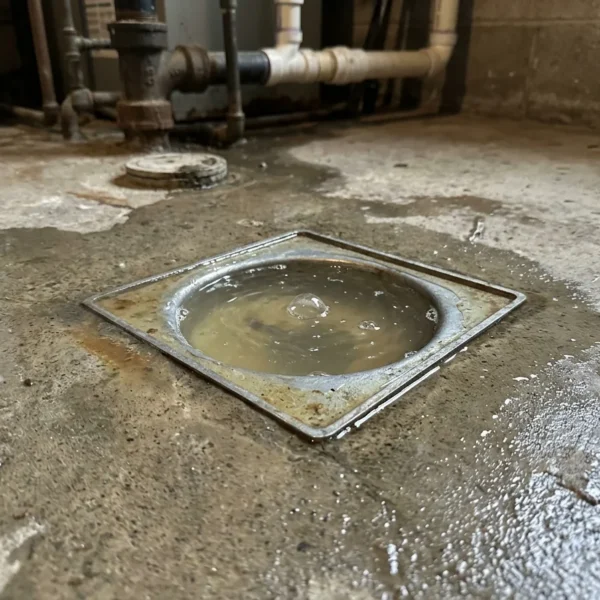
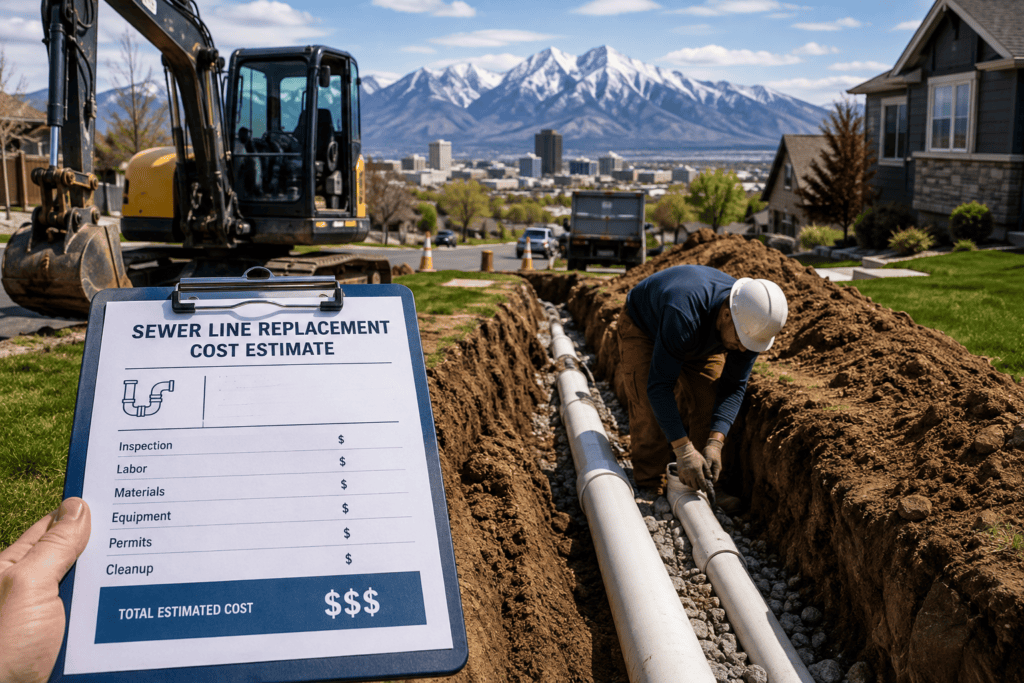
There is no single sewer line replacement cost that applies to every Salt Lake City home. Once replacement is required, the final price depends on the length and depth of the sewer, how crews can reach it, what sits above the line, the replacement method, permits, labor, and how much surface restoration is needed.
A short sewer under an open yard is very different from a deep lateral beneath concrete, landscaping, or other improvements. The most useful estimate comes after the existing line has been inspected, located, and measured. This guide explains what homeowners actually pay for during sewer line replacement and why project costs can vary so much from one property to another.
What Determines Sewer Line Replacement Cost?
The biggest cost factors are usually pipe length, depth, access, replacement method, and restoration. The condition of the old sewer also matters because it can affect how the existing pipe is removed, broken apart, or used as a route for trenchless replacement.
A replacement project may involve much more than installing new pipe. Camera inspection, sewer locating, excavation or access pits, equipment, labor, new connections, testing, inspection, backfilling, concrete work, and landscape restoration can all become part of the total.
That is why a simple online price per foot rarely tells the full story. The pipe material is only one part of the cost to replace sewer line piping.
How Much of the Sewer Line Needs to Be Replaced?
The length of the failed sewer has a direct effect on the project scope. Replacing a shorter section normally requires less pipe and less work than replacing the lateral from the house toward the municipal sewer connection.
Length is not the only issue, though. A longer line through open soil may be easier to replace than a shorter sewer that runs below a driveway or finished patio. Access conditions can sometimes have a bigger effect on the job than the number of feet involved.
Before full replacement is planned, the contractor should determine whether the whole line is failing or whether only one area is damaged. ACME’s residential sewer main service includes assessment of sewer-main conditions and structural concerns, helping separate blockages from problems that may require larger repair or replacement.
Why Does Pipe Depth Affect the Cost?
Deeper sewer lines normally require more work to reach safely. More soil has to be removed or managed, and excavation may require more equipment and site preparation.
Depth can also affect the size of access pits used for trenchless work. Even when crews do not dig along the entire sewer route, they still need suitable areas to reach the existing pipe and install replacement equipment.
A deep sewer near other underground utilities can add another layer of planning. Water, gas, power, telecommunications, irrigation, and other buried services need to be considered before excavation begins.
For this reason, two lines with the same length can have very different main sewer line replacement cost totals if one is much deeper than the other.
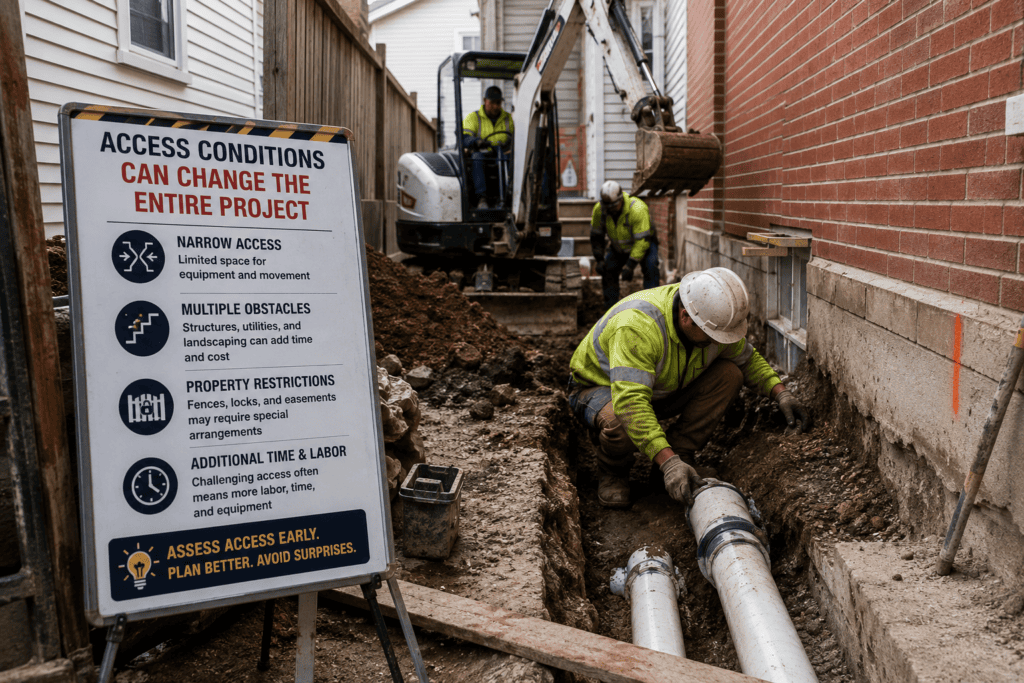
Access Conditions Can Change the Entire Project
A sewer line beneath an open lawn is usually easier to reach than one beneath concrete, a driveway, landscaping, retaining features, or another finished surface.
Traditional excavation may require those surfaces to be removed before the pipe can be reached. After the new sewer is installed, the area may need to be rebuilt. Concrete replacement, soil grading, irrigation repairs, sod, plants, or other landscaping can add work beyond the sewer itself.
Equipment access matters too. A yard with a wide, open route for machinery creates a different project from a tight property where crews have limited space.
These conditions are an important part of sewer excavation cost because homeowners are paying for access to the pipe as well as the pipe replacement itself.
Traditional Excavation vs. Trenchless Sewer Replacement
Traditional excavation exposes the existing sewer from above. Once the pipe is accessible, crews can remove or replace the failed section, correct grade where needed, install the new sewer, and then backfill the excavation.
Trenchless replacement reduces the amount of full-length digging required when the existing sewer route and site conditions are suitable. Pipe bursting is one common replacement method. The old pipe is broken or displaced while a new pipe is pulled into the existing route.
A key distinction is that pipe bursting is a replacement method, not simply a coating placed inside the old sewer. EPA guidance describes pipe bursting as a trenchless method that replaces an existing pipe while reducing continuous excavation along the route.
Neither approach is automatically better. The right choice depends on the damage, pipe route, grade, access, surrounding utilities, and what is above the sewer.
Is Trenchless Sewer Replacement Always Cheaper?
No. Trenchless sewer replacement cost may be attractive when open excavation would require extensive concrete removal, pavement work, or landscape rebuilding, but it is not automatically the lowest-cost method.
A shallow pipe beneath open soil may be straightforward to excavate. In that situation, traditional replacement can be practical because there is less surface restoration to avoid.
A deeper line beneath a driveway or established landscape presents a different calculation. Trenchless equipment may cost more in one part of the project while reducing work elsewhere.
Homeowners should therefore compare the complete project rather than the digging method alone. The useful question is not, “Which method has the cheaper pipe installation?” It is, “Which method produces the best total scope for this property?”
What Can Affect Pipe Bursting Costs?
Pipe bursting requires the existing sewer route to be evaluated carefully. Access pits are needed, and the contractor must understand the old pipe material, diameter, route, connections, and nearby utilities.
Previous repairs can complicate the work. Heavy fittings, repair clamps, unusual transitions, sharp changes in direction, or other underground conditions may make the existing route harder to use.
A sewer with a major grade problem can also require a different plan. If the old line has a serious belly or poor alignment, simply following the same route may not correct the original defect.
That is one reason the trenchless sewer repair cost or replacement estimate cannot be calculated accurately from pipe length alone. The contractor first needs to know whether trenchless technology fits the actual defect.
Does the Existing Pipe Material Affect Replacement?
Yes. Clay, cast iron, Orangeburg, PVC, ABS, and other sewer materials do not fail or respond to replacement equipment in exactly the same way.
Old clay may be cracked or shifted at the joints. Cast iron may have heavy corrosion or previous repairs. Orangeburg can deform and lose its original shape. Plastic piping may have bad grade, damaged joints, or physical damage instead of corrosion.
The material can affect how contractors approach removal or pipe bursting, but it does not determine the total price by itself. Depth, access, length, utilities, and surface restoration are often just as important.
If you are unsure whether an aging sewer has actually reached replacement stage, the condition of the line matters more than simply knowing its material.
Why Should a Camera Inspection Come Before Full Replacement?
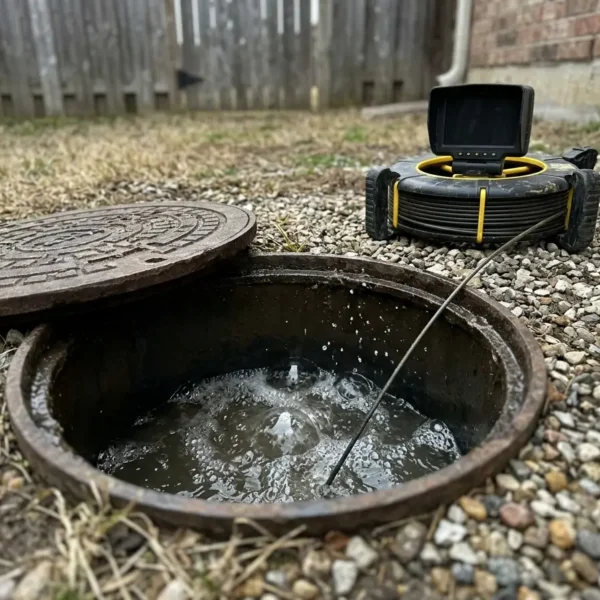
A sewer camera helps confirm that replacement is actually necessary. Full sewer line replacement is a major project, so the reason for replacing the pipe should be clear before excavation begins.
A camera may show collapsed areas, widespread cracking, severe root intrusion, offset joints, deformation, heavy corrosion, or other structural damage. It may also show that the problem is much more limited than expected.
That distinction can save a homeowner from solving the wrong problem. A line with removable buildup may need cleaning or descaling. One damaged section may allow a targeted repair. A sewer with defects throughout much of its length may make replacement the stronger option.
The camera findings should also be considered with the service history. One clog is very different from several years of backups, root removal, and repairs along the same aging lateral.
Repair Cost and Replacement Cost Are Different Questions
The sewer repair cost question comes first when a homeowner is trying to determine whether the existing pipe can remain in service. Repair pricing focuses on correcting a limited defect while keeping usable portions of the sewer.
Replacement pricing begins after a different conclusion has been reached: a large section or the full line needs to be replaced.
One cracked joint may support a spot repair. A short broken section may also be repairable. Widespread structural failure, repeated collapses, severe deformation, or many failing areas can make full replacement more reasonable.
If you are still at the repair-or-replace stage, read our guide to sewer line repair cost in Salt Lake City. That article focuses on repair scope, while this guide stays focused on what determines the price after replacement becomes necessary.
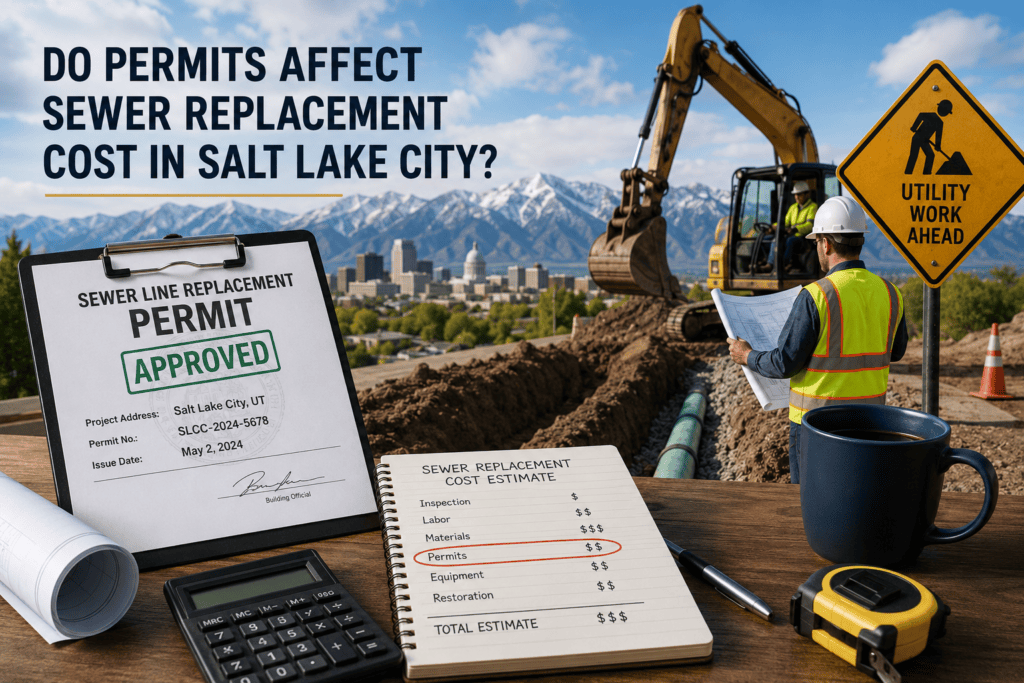
Do Permits Affect Sewer Replacement Cost in Salt Lake City?
Yes. Sewer replacement work in Salt Lake City can involve permit, inspection, and testing requirements that need to be included in project planning.
Salt Lake City code states that applications for sewer repair or replacement must be made by a licensed and bonded sewer contractor or plumber. Replacement work must also be tested and inspected according to the city’s wastewater-system standards.
The city’s current FY2027 fee schedule includes sanitary-sewer inspection and permit-related charges. Some repair and replacement charges are based on the work required rather than one universal flat fee.
For homeowners comparing sewer line replacement Salt Lake City estimates, it is worth asking whether permits, inspections, and related city requirements are included in the proposal.
Who Is Responsible for the Sewer Lateral in Salt Lake City?
Salt Lake City defines a sewer lateral as the sewer carrying wastewater from a residence or other structure to the public wastewater system and states that the lateral is owned by the user. City code also says each owner bears the cost of maintaining and repairing their building or lateral sewer.
That distinction matters because a sewer problem can be outside the house and still fall on the property owner’s side of the system.
The exact location should be confirmed before replacement is planned. Salt Lake City Public Utilities also provides a sewer lateral map that shows sewer lines, laterals, manholes, and available permit notes for an address, which can help with early research.
Homeowners within ACME’s Salt Lake City service area can have the private line evaluated before deciding on the replacement scope.
What Should Be Included in a Sewer Replacement Estimate?
A useful replacement estimate should tell you what work is actually being proposed, not just provide one total at the bottom of a page.
The scope should make clear which section of sewer is being replaced, the expected route, approximate depth, replacement method, and major access requirements. It should also explain which parts of excavation, pipe installation, connections, testing, permits, inspection, backfill, and surface restoration are included.
One important question is what is not included. If concrete replacement, landscape restoration, irrigation work, or another part of the site will be handled separately, the homeowner should know that before comparing estimates.
A good estimate should also explain which underground conditions could change the project once work begins. Sewer replacement happens below ground, and older undocumented repairs or unexpected site conditions can sometimes affect the final scope.
How Can You Compare Two Sewer Replacement Estimates?
Compare scope before price. A lower estimate may cover less work, while a higher proposal may include restoration, permits, inspections, or access work that another contractor has left outside the quote.
Pay attention to the replacement method as well. If one contractor proposes open excavation and another proposes pipe bursting, ask why each method fits the property and how grade, connections, access, and restoration will be handled.
The estimate should also connect back to the diagnosis. Homeowners should understand what camera findings or structural problems make replacement necessary.
This keeps the decision focused on the actual sewer rather than simply choosing the lowest number.
Frequently Asked Questions About Sewer Line Replacement Cost
How much does sewer line replacement cost in Salt Lake City?
There is no single reliable sewer line replacement cost for every property. Length, depth, access, excavation, trenchless feasibility, permits, labor, connections, and surface restoration all affect the final estimate.
Does pipe length affect sewer replacement cost?
Yes. Longer replacement runs generally require more pipe and work, but length is only one factor. A short, deep sewer beneath concrete can sometimes involve more site work than a longer line through an open yard.
Is trenchless sewer replacement cheaper than excavation?
Sometimes. Trenchless sewer replacement cost can be competitive when it avoids extensive surface removal and restoration, while open excavation may make more sense for shallow and easily accessible lines.
Does a sewer line belly require full replacement?
Not always. A localized belly may allow correction of one section, while poor grade affecting a much larger part of the sewer may require broader work. The location, severity, and condition of the rest of the pipe should guide the decision.
Is pipe bursting the same as sewer lining?
No. Pipe bursting replaces the existing sewer with a new pipe along the route. Lining rehabilitates the inside of an existing host pipe and does not serve the same purpose in every type of structural failure.
Do I need a permit for sewer line replacement in Salt Lake City?
Salt Lake City requires applicable permits for sewer work, and repair or replacement applications must be made by a licensed and bonded sewer contractor or plumber. The completed work is also subject to testing and inspection requirements.
Who pays to replace the private sewer lateral in Salt Lake City?
Salt Lake City code treats the lateral as user-owned and places maintenance and repair responsibility on the owner. Property-specific responsibility should still be confirmed when the location of the failure or connection is unclear.
Get a Sewer Replacement Estimate Based on the Actual Property
The real sewer line replacement cost is determined by the project beneath your property, not by a national price range. Pipe length, depth, access, replacement method, permits, connections, and restoration all need to be considered before an estimate can be meaningful.
ACME Sewer & Drain Cleaning provides sewer diagnostics, cleaning, locating, and sewer-main services across Salt Lake City and the Wasatch Front. ACME’s sewer-main service includes evaluating structural issues as well as clearing blockages, helping determine when a sewer problem has moved beyond routine cleaning.
If inspection shows that you need sewer line replacement Salt Lake City rather than another repair, contact ACME Sewer & Drain Cleaning or call (801) 930-8000 to discuss the condition of the line and the replacement options for your property.