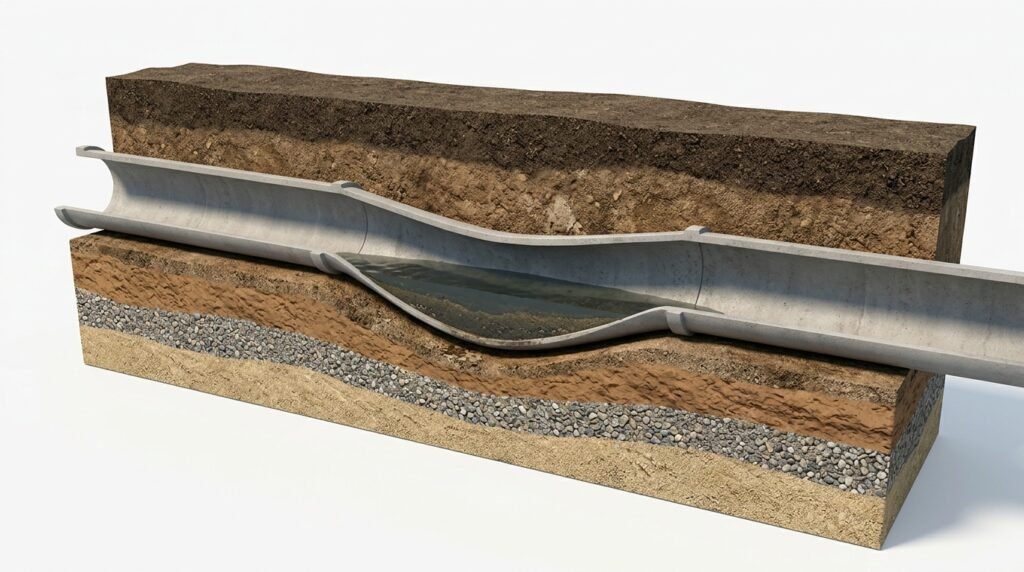
A belly in sewer line piping is a low section where the pipe loses its normal downward grade and allows wastewater to collect. It is not the same as an ordinary clog. Clearing the pipe may improve drainage for a while, but cleaning cannot correct a structural low spot or restore the pipe’s proper slope.
Not every sewer line belly needs immediate excavation. The important questions are how deep the low spot is, how much wastewater stays there, and whether it is causing repeated blockages or backups. A sewer camera inspection can help determine whether the problem is a minor dip that can be watched or a larger defect that needs repair.
What Exactly Is a Belly in a Sewer Line?
A sewer line normally relies on gravity. Wastewater leaves the home and travels through the sewer lateral toward the public sewer. For that process to work well, the pipe needs a suitable and consistent downward grade.
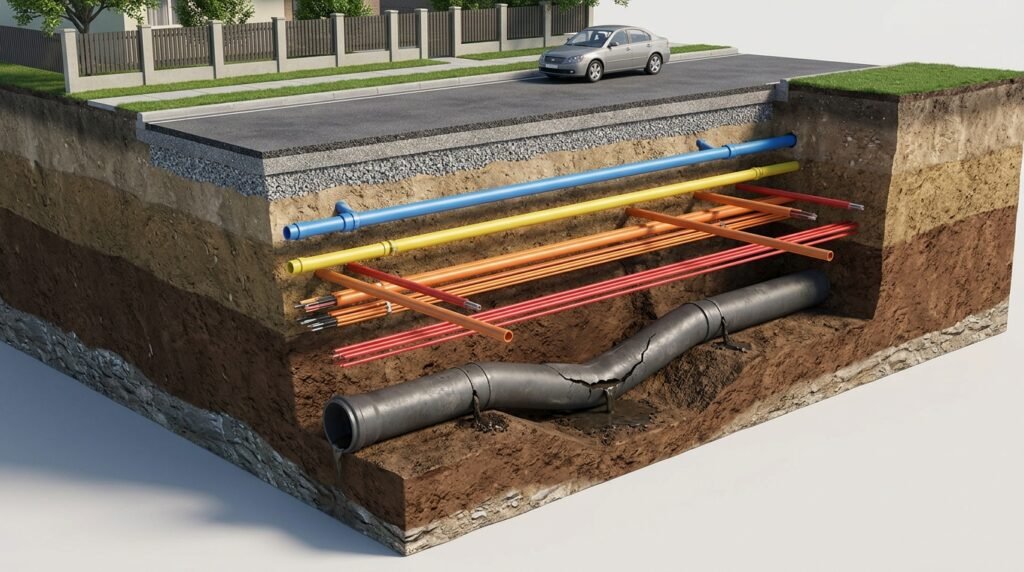
A belly develops when one part of the line drops below that intended grade and then rises again. This creates a low point where water can remain after the rest of the pipe has drained. You may also hear this called a sewer pipe sag, sagging sewer line, or sewer line low spot.
Utah wastewater design rules highlight why grade matters. Gravity sewers are designed with slope in mind to reduce settling, and state rules call for sewer runs to be laid at a uniform slope between connection points. The exact requirements for a residential lateral depend on the system and applicable plumbing rules, but the basic principle is the same: gravity drainage works best when wastewater has a continuous path downhill.
Is a Sewer Belly the Same as a Clog?
No. A clog is material blocking or restricting the inside of a pipe. A bellied sewer pipe is a problem with the pipe’s position, grade, or support.
A clog may be made of grease, roots, wipes, scale, debris, or other material. A drain machine or hydro jetting may be able to remove that material and restore flow. A belly is different because the low point remains after the material has been cleared.
That difference matters when a homeowner has the same sewer problem again and again. Snaking may create an open path through debris sitting in the belly, so everything appears normal for a time. Wastewater can then collect in the low section again, allowing solids to settle and another blockage to form.
A municipal sewer utility such as Seattle Public Utilities also describes sewer sags as sections that lose normal slope and notes that they become a concern when debris settles and builds up enough to interfere with flow.
What Are the Signs of a Sewer Line Belly?
The most common signs of sewer line belly problems look very similar to other sewer issues. That is why symptoms alone usually cannot confirm the diagnosis.
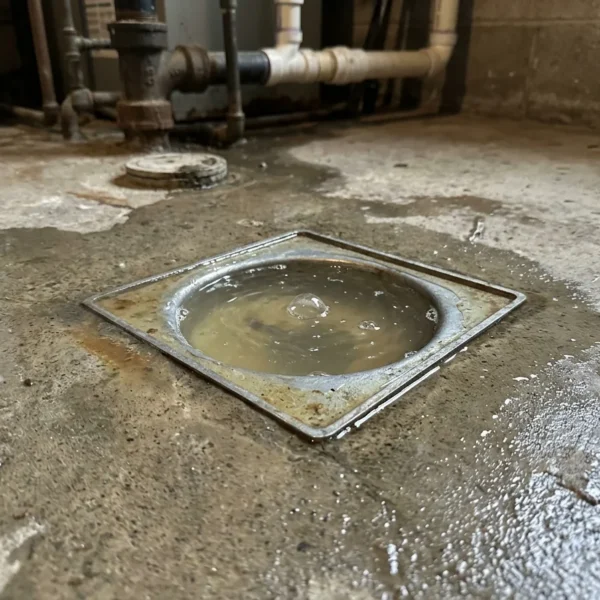
One warning sign is a sewer main that repeatedly slows down or backs up after being cleaned. You might also notice several fixtures draining slowly at once, gurgling from lower drains, or wastewater backing up through a basement floor drain, shower, or toilet.
The pattern is often more useful than one isolated symptom. A bathroom sink that drains slowly may have a local clog. Several drains having trouble at the same time can point toward an issue farther down the sewer lateral.
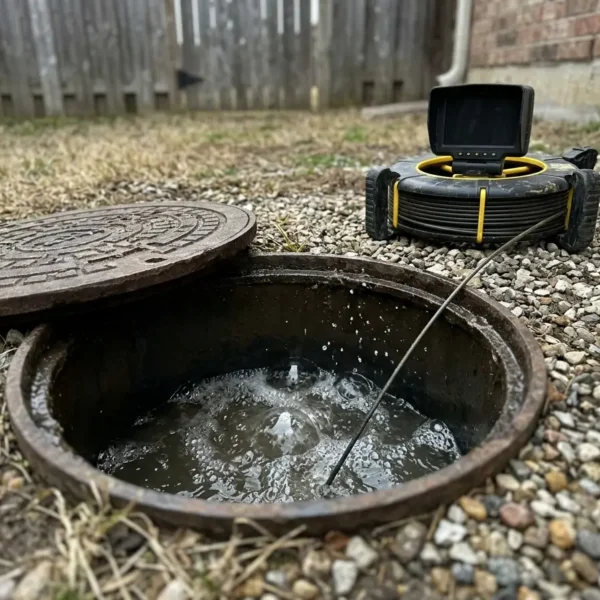
Another clue may appear during a camera inspection. If the camera enters a section and becomes partly or fully submerged before emerging again, there may be standing water in sewer line piping. That finding deserves closer inspection because several conditions can affect what the camera shows.
Does Standing Water Always Mean the Sewer Line Has a Belly?
No. Standing water in sewer line footage can be a clue, but it should not be treated as proof by itself.
A technician needs to consider where the water appears, how long that section is, how deep the water seems to be, and what the pipe looks like before and after the low area. A blockage downstream can also cause water to remain in a pipe temporarily. Camera orientation and the amount of water flowing during the inspection can affect what is visible as well.
For that reason, diagnosis often involves clearing significant obstructions before evaluating the pipe. The technician can then inspect the line under better conditions and determine whether water continues to collect in the same area.
ACME uses video inspection as part of sewer diagnosis and can identify visible structural concerns, corrosion, roots, debris, or shifting pipe conditions.
What Causes Sewer Line Sagging?
A sewer line sagging problem usually develops because the pipe loses proper support or was not installed at the correct grade in the first place. The actual cause can only be determined after considering the site, pipe, and surrounding ground.
Soil settlement is one possible cause. A sewer line depends on the material below and around it for support. If that soil settles unevenly, washes away, or shifts, part of the pipe may move downward.
Installation can also play a role. If the pipe bed was not prepared or compacted correctly, a section may settle later. Problems with initial pipe grade can create a low point from the beginning rather than developing years afterward.
Ground movement can contribute as well. The Salt Lake City area has site conditions that vary significantly from one property to another. Current city design criteria recognize soil conditions and seismic considerations as important parts of local construction, which is one reason underground problems need to be evaluated based on the actual property instead of a citywide assumption.
Can Tree Roots Cause a Sewer Belly?
Tree roots are better known for entering cracks and joints than for directly creating a belly. However, roots and soil movement can exist alongside structural pipe problems.
For example, a joint may shift as surrounding soil settles. That movement may affect grade while also creating an opening where roots can enter. In that case, the camera inspection may show more than one problem in the same section.
This is another reason repeated root cutting should not automatically be treated as the complete solution. If roots continue returning in the same location, it can be useful to inspect the pipe and determine why they have access to the line.
Can Snaking Fix a Belly in a Sewer Line?
A sewer snake can remove or break through debris, but it cannot lift a pipe back into the proper position. That is the key difference between clearing a blockage and correcting a belly in sewer line piping.
If solids have collected in the low spot, snaking may improve flow. The homeowner may notice faster drainage and assume the problem is solved. However, the low section is still there, so wastewater may begin collecting again.
That does not make snaking useless. Cleaning is often necessary before a proper camera inspection can be performed. It can also be an appropriate maintenance step when a small sag is being monitored rather than repaired. The mistake is expecting a cleaning tool to correct pipe grade.
Can Hydro Jetting Fix a Sewer Line Belly?
Hydro jetting can clean material from a sewer pipe, but it cannot change the physical slope of the line. High-pressure water may remove grease, sludge, scale, roots, or debris that has settled around a sewer line low spot, allowing the line to flow better for a period of time.
The same limitation applies, however. Once the cleaning is complete, the low point remains. If the belly is large enough to collect solids regularly, blockages may return.
Cleaning and structural repair solve different problems. A good diagnosis should separate the material inside the pipe from the condition and alignment of the pipe itself.
How Is a Sewer Line Belly Diagnosed?
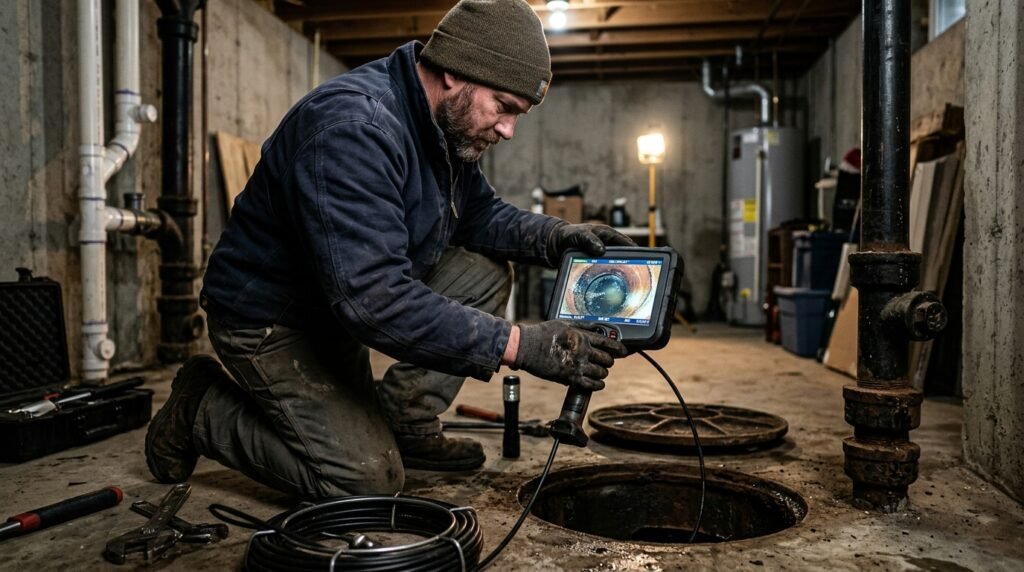
A sewer camera is usually one of the most useful tools for identifying a suspected belly. The camera travels through the sewer lateral while the technician watches the pipe interior and records changes in condition.
When the camera approaches a low section, water may begin covering the lens. It may remain underwater for part of the run before coming back above the water as the pipe rises. The technician can compare that pattern with other findings such as offsets, cracks, roots, corrosion, or deformation.
The line can also be located from above ground. ACME’s equipment can be used to identify sewer-line path and depth before excavation, helping crews avoid guessing where an underground problem sits.
For a homeowner, the useful questions after an inspection are simple: Where is the low spot? How long is it? How much of the pipe is holding water? Is debris collecting there? Is the rest of the sewer in good condition?
Does Every Sewer Line Belly Need Repair?
No. The presence of a small sag does not automatically mean the yard needs to be excavated.
Severity and performance matter. Some minor low areas may cause little or no noticeable trouble. A larger sag can allow enough debris to settle that recurring blockages become more likely. Seattle Public Utilities, for example, separates sags into levels of concern and recommends different responses based on how much of the pipe is affected rather than treating every sag as an automatic emergency.
A homeowner and sewer professional should look at the whole picture. A small low spot in a line that has remained trouble-free may be watched. A deeper belly associated with repeated backups, heavy solids, or other structural defects deserves more serious attention.
Monitoring can also include future camera inspections so changes in the pipe can be compared over time.
When Does Sewer Line Belly Repair Make Sense?
Sewer line belly repair becomes more reasonable when the low section is interfering with normal wastewater flow, causing repeated backups, or contributing to frequent cleaning calls. Repair may also be recommended when the same section has other defects that make continued monitoring less practical.
A true grade problem often requires crews to expose the affected area and restore proper support and slope. The damaged or poorly positioned section can then be reset or replaced as needed.
The exact repair depends on depth, pipe condition, surrounding soil, access, length of the low spot, and what is above the sewer line. A section beneath open landscaping presents a different job from a line running beneath concrete or other finished surfaces.
ACME provides residential sewer main cleaning and repair services and evaluates sewer-main conditions before recommending the next step.
Can a Sewer Belly Be Fixed Without Digging?
Not every trenchless method can correct a true belly. This is an important point for homeowners comparing repair options.
Some trenchless lining systems rehabilitate the inside of the existing pipe. They can address certain structural defects without opening the full sewer route, but the liner generally follows the path of the existing host pipe. An EPA review of sewer rehabilitation technologies specifically lists the inability to remove sags as a limitation of common cured-in-place lateral lining methods.
Portland’s sewer rules provide another practical example. The city requires contractors to examine lateral defects before lining and limits CIPP approval where significant bellies exist.
That does not mean trenchless technology has no role in sewer repair. It means the repair method has to match the defect. If the main problem is incorrect grade, the contractor needs a method that actually corrects that grade rather than simply improving the inside surface of the existing pipe.
What Affects Sewer Belly Repair Cost?
There is no useful flat sewer belly repair cost that applies to every home. Pricing depends heavily on what is required to restore the affected section to proper grade.
Depth is one factor. A deeper lateral requires more excavation and site preparation than a shallow, easily reached pipe. The length of the sag also matters because correcting a short section is different from rebuilding a longer run.
Access can make a large difference too. Landscaping, concrete, structures, fences, underground utilities, and equipment access can all affect the repair plan. The existing pipe material and condition may also change whether only the low section should be addressed or whether a larger repair deserves consideration.
For a deeper discussion of these factors, see our guide to sewer line repair cost in Salt Lake City.
Why Sewer Bellies Matter for Salt Lake City Homeowners
A belly is not unique to Salt Lake City, but local properties can present very different sewer conditions. Older established neighborhoods may have sewer laterals that have been in the ground through years of soil movement, landscaping changes, utility work, and property improvements. Newer properties can have grade problems too if installation or soil support is involved.
Salt Lake City also uses gravity sewer infrastructure, and the state design principle of maintaining proper sewer grade shows why low spots deserve attention when they interfere with flow.
The city provides a sewer lateral mapping tool that can help property owners view sewer lines, laterals, manholes, and certain permit information by address. For homeowners needing Salt Lake City sewer line repair, however, an on-site camera inspection and line location provide much more detail about the private lateral itself.
ACME serves homeowners throughout its Salt Lake City service area and communities across the Wasatch Front.
Frequently Asked Questions About Sewer Line Bellies
Is a belly in a sewer line an emergency?
Not always. A belly in sewer line piping becomes more urgent if it is causing sewage backups, preventing normal drainage, or repeatedly collecting debris. A small sag that is not causing problems may sometimes be monitored instead of repaired immediately.
Can a sewer belly get worse?
It can if the underlying soil or pipe support continues to move. Some low spots may remain stable, while others can change over time. Comparing camera inspections can help show whether the condition is staying the same or becoming more severe.
Will a sewer snake remove a belly?
No. A sewer snake can clear material sitting in a sewer line belly, but it cannot restore pipe support or slope. If the line repeatedly clogs in the same low section, further inspection may be needed.
Can hydro jetting remove standing water from a sewer belly?
Hydro jetting can remove material that has collected in the low point and may improve flow, but it does not correct the sewer pipe sag itself. Water may continue collecting there if the pipe still has improper grade.
Does standing water on a sewer camera always mean the pipe needs replacement?
No. The amount of water, length of the affected area, pipe condition, and history of backups all matter. A professional should evaluate the full camera footage before deciding that repair or replacement is necessary.
Is trenchless sewer repair an option for a bellied sewer pipe?
It depends on the repair method and the defect. Common lining methods improve an existing pipe but do not necessarily correct its grade. When the main issue is a significant low spot, excavation or another method that restores proper slope may be required.
Is it worth repairing a small sewer line belly?
A small sewer line belly may not require immediate work if wastewater continues to flow and recurring blockages are not occurring. The decision should be based on the severity of the sag, its effect on drainage, and the condition of the rest of the sewer.
Find Out Whether the Problem Is a Clog or a Sewer Belly
Repeated drain cleaning should not be treated as the only answer when the same part of a sewer keeps causing trouble. A clog can be removed. A structural sagging sewer line needs to be identified, measured, and evaluated before the right long-term solution can be chosen.
ACME Sewer & Drain Cleaning provides sewer cleaning, inspection, locating, and repair services throughout Salt Lake City and the Wasatch Front. ACME’s sewer-main service includes assessment for structural issues as well as clearing blockages.
If you are dealing with recurring backups, a suspected bellied sewer pipe, or camera footage showing a persistent low spot, contact ACME Sewer & Drain Cleaning or call (801) 930-8000 to have the problem evaluated before deciding on repair.