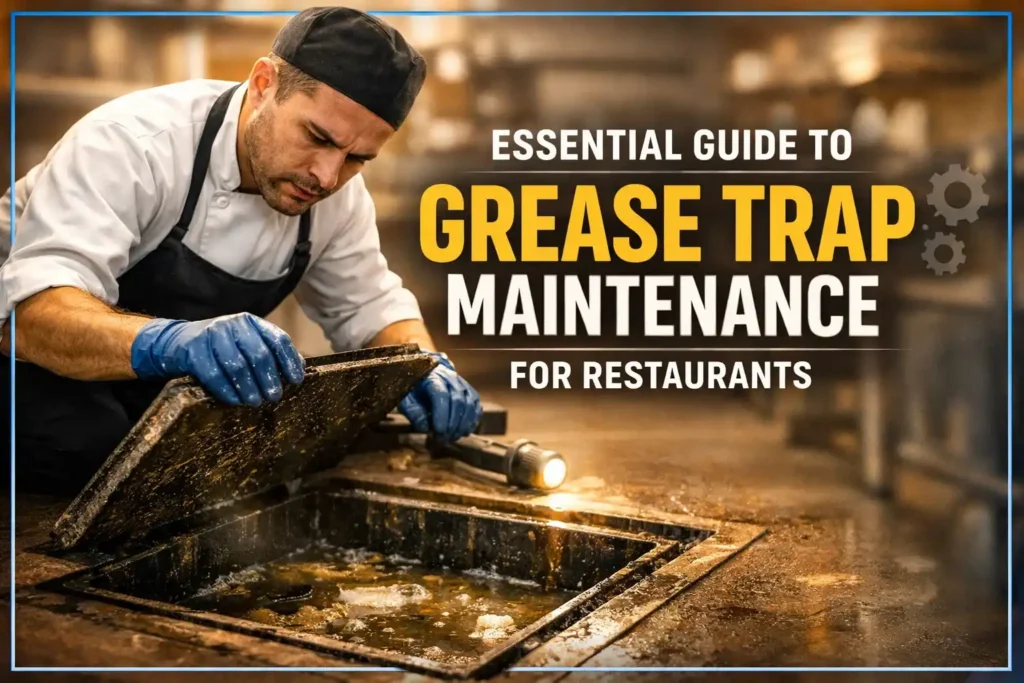
A grease trap, or grease tank, is a specialized plumbing device that captures fats, oils, and grease from your kitchen wastewater. It uses the baffles to slow water flow, allow the grease to float to the top, and allow the solids to sink.
With the passage of time, when the level of grease and solid food particles increases, it requires proper cleaning. If you are a restaurant owner or you work in the kitchen of a restaurant, you might have been in a difficult situation when it comes to grease trap maintenance. No need to worry! This essential guide to grease trap maintenance for restaurants will assist you. Let’s begin by understanding the significance of grease traps.
Why Grease Traps Are Essential for Restaurants:
Grease traps are vital for any cafe, restaurant, or food-making company. Without grease traps, all the food, oils, and grease would solidify in your pipes or might enter the main sewer lines. However, to block the food particles and grease from entering the main sewer lines, grease trap maintenance is required.
Grease Trap Maintenance for Restaurants:
Regularly cleaning a grease trap is an essential part of any restaurant’s maintenance. It prevents clogs and overflow. As the grease accumulates in the trap, a time comes when it reaches its full capacity. This is when the new grease and food particles start occupying your pipe. So it leads to blocking the pipes, slow drainage, foul odor, and eventually a complete blockage or overflow. Just imagine on a busy weekend, your sink starts overflowing. With regular cleaning, you keep everything flowing smoothly and focus on serving customers.
Grease Trap Cleaning (Step by Step)
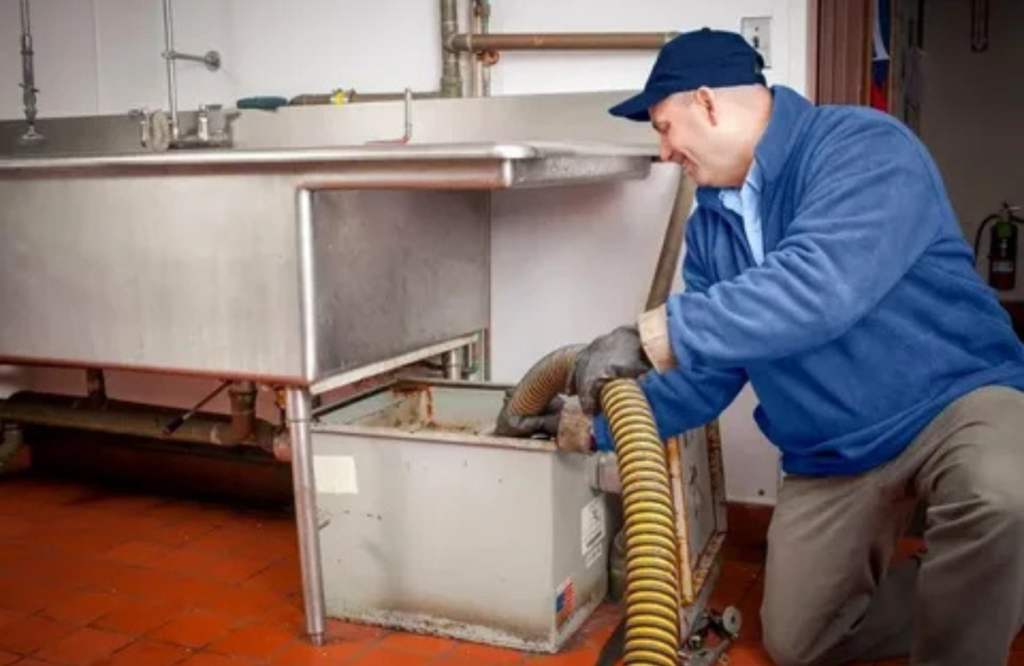
Cleaning a grease trap is not like cleaning dishes. It is recommended to hire professionals to clean the grease trap. However, if you want to DIY, follow these steps:
- Wear gloves and masks and gather the tools required, such as scoops or scrapers, shop vacuums, and FOG disposal tools.
- Remove the lid using appropriate tools.
- Inspect the issues by measuring the grease layer and the volume of the solids.
- Check if there are any cracks or damage.
- Use a vacuum pump to empty all substances contained in the grease trap.
- Utilize either a scraper or a putty knife to remove any residuals of hardened grease and sludge from all sides, bottom surfaces, and any metallic components located inside the grease trap.
- Add hot water until all persistent particles are removed from the containers.
- Inspect piping systems entering and exiting grease traps to determine the proper flow rate of water.
- Dispose of waste/grime down the drain.
- Document the process and schedule the next maintenance.
Identify the Warning Signs
Most of the restaurant owners make mistakes by overlooking an obvious problem before servicing or cleaning a grease trap. However, if your sink has been slow with a foul odor, your trap is already clogged. Go ahead and call the grease trap cleaning service right away. Moreover, with a proactive approach, such as conducting regular maintenance visits, you can save yourself from hassles and big losses. Identifying the grease trap issue will not only save you money but will also enable you to run your restaurant smoothly without any interruption.
Grease Trap Replacement & Cleaning Cost Breakdown
Familiarity with grease trap replacement and cleaning costs helps restaurant owners more effectively budget their maintenance. This total amount charged for cleaning varies considerably from trap to trap, depending on the size of the trap, the frequency of service required, how easy the trap is to access, how much grease the trap actually contains and so on.
To help the restaurant owner out, we have provided below an infographic for the cost of cleaning & replacing a grease trap.
To help restaurant owners, we have provided a breakdown of the costs associated with cleaning and replacing a grease trap. The costs will vary depending upon where you are located, as well as other various factors, including the date/time frame that the service is done, how far away from the restaurant you are located, etc. We have provided a table with average price ranges of grease trap cleaning in your area; however, for an accurate grease trap cleaning cost, please contact your local expert, such as Acme Sewer and Drain Cleaning Services!
| Grease Trap Replacement & Cleaning Cost Breakdown | |||
| Grease Trap Size | Average | Cleaning Cost | Replacement Cost |
| Small | (10–100 Gallons) | $100–$300 | $250 to $1,500 |
| Medium | (500–1,000 Gallons) | $200–$600 | $1,500 and $4,000 |
| Large | (1,000–2,000 Gallons) | $600–$1000 | $4,000 and $8,500+ |
Grease Trap vs. Grease Tank Cleaning Services:
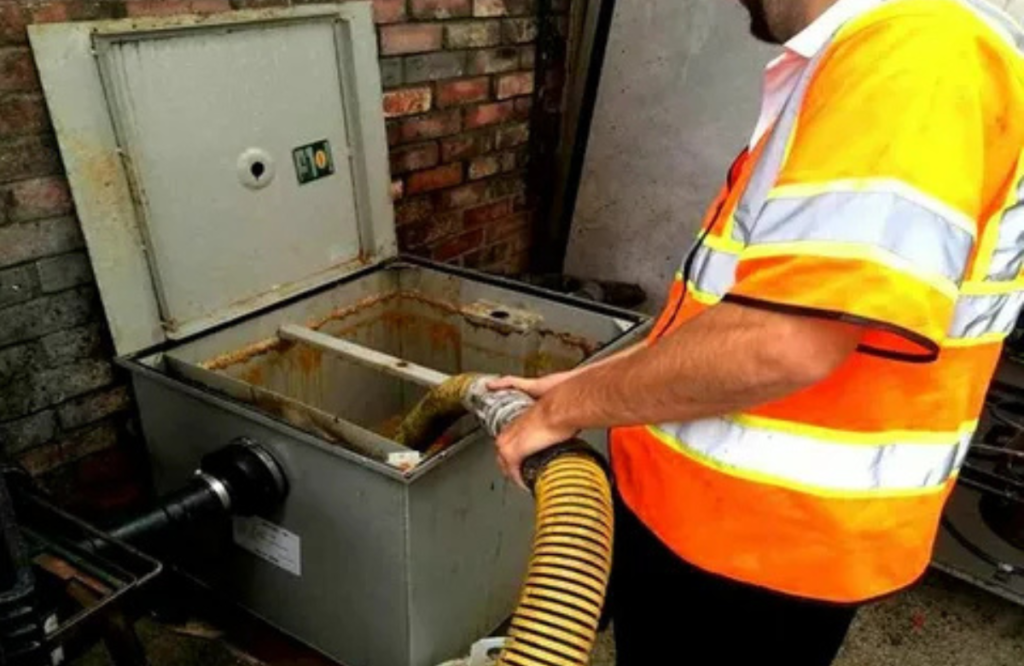
Trying to figure out whether you should call for grease tank cleaning or grease trap cleaning services? Don’t sweat it. These terms refer to the same service. We have a few other names for it, too, like “grease interceptor” and “grease recovery device.” Either way, grease traps, interceptors, or whatever you want to call them are special plumbing devices that catch and separate fats, oils, and grease (FOG) from kitchen wastewater prior to entering sewer lines.
Conclusion:
The grease trap prevents the fat, oils, and grease (FOG) from entering the main sewer line. Moreover, it keeps on stopping the grease and food particles until it gets filled to the brim. This is where grease trap cleaning and maintenance come in. If you’re a restaurant owner, it is advisable to draw up a proper maintenance schedule to prevent blockage, poisoning, overflow, and a terrible smell.
If you are searching for affordable grease trap replacement & cleaning services, then there is just one name to remember—Acme Sewer & Drain Cleaning. They have been in this business for several years now, and their reliable drain cleaning services have made them the favorites in Salt Lake City. Whether you are looking for grease trap replacement services or grease trap cleaning services, they are the ones to call. Call now for prompt and effective grease trap maintenance!
FAQs:
Q1. How frequently should a restaurant clean its grease trap?
Restaurants should clean grease traps every 1–3 months, depending on kitchen usage, trap size, and grease buildup, to prevent clogs, foul odors, and plumbing system failures.
Q2. What happens if a grease trap is not cleaned regularly?
If a grease trap is not cleaned regularly, grease and food particles accumulate, causing slow drainage, foul odors, pipe blockages, and potential sewage backups.
Q3. What is the difference between a grease trap and a grease interceptor?
A grease trap and grease interceptor serve the same purpose—capturing fats, oils, and grease (FOG). Interceptors are typically larger systems used for high-volume commercial kitchens.