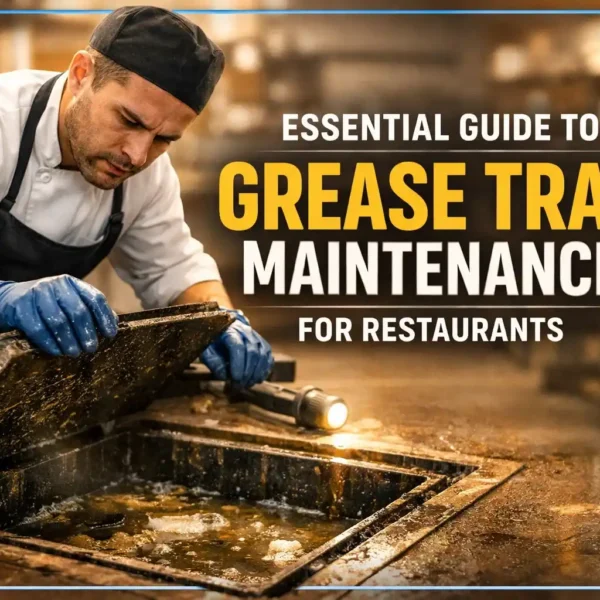

Grease in kitchen sinks is mainly produced from everyday cooking and dishwashing activities. FOG is an abbreviation for fats, oils, and grease, which refers to sink grease. When FOG residues go down the drain, they start sticking to the pipelines, which work as a “trap” for water and other particles to drain down. This is where grease trap cleaning becomes more critical.
Grease trap cleaning is a professional process of removing accumulated fats, oils, grease, and solid food waste from the kitchen drainage systems. The grease trap cleanout involves pumping out the waste and scraping and washing the tank to prevent severe clogs, awful odors, and health code violations.
This essential guide to grease trap maintenance for restaurants will assist you in thoroughly cleaning and maintaining your kitchen plumbing system. However, this will also assist in cleaning and maintaining residential kitchen plumbing.
What is Grease Trap Cleaning & Maintenance?
Grease trap cleaning and maintenance is the process of removing fats, oils, grease (FOG), and food particles to stop them from entering the municipal sewer system. Regular cleaning and maintenance can help you avoid costly pipe clogs, unpleasant odors, and environmental risks.
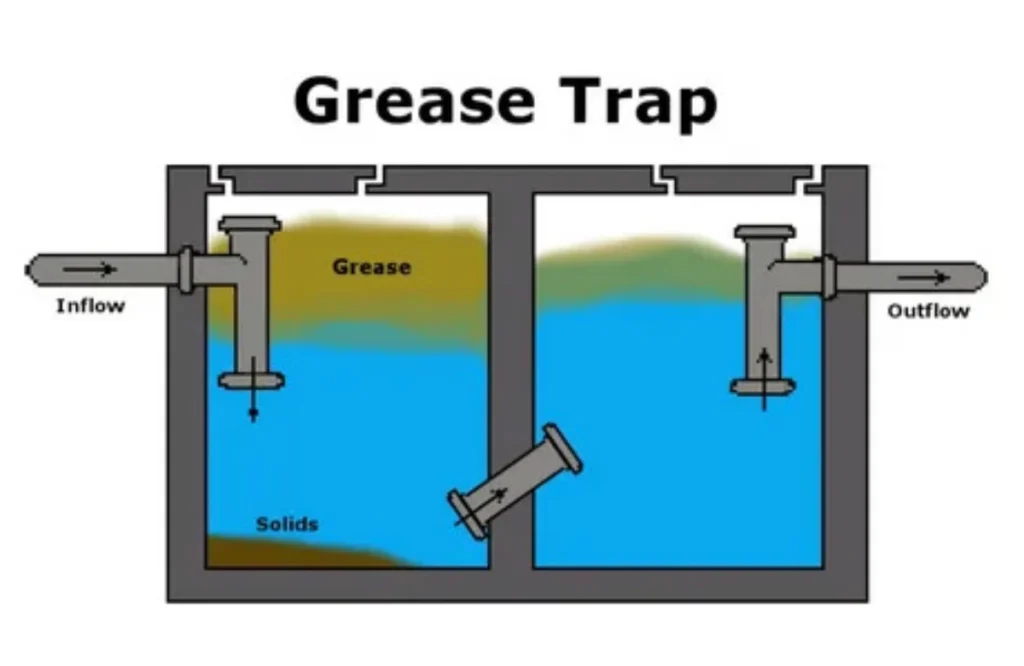
Grease Trap Cleaning Step-by-Step:
Cleaning a grease trap is not like ordinary cleaning; it requires special equipment and expertise for a comprehensive cleanout. Follow the steps mentioned below to keep your kitchen clean and compliant with safety and environmental regulations.
- Step 1: Gather all the cleaning tools, such as gloves, face masks, scoops or scrapers, shop vacuums, and FOG disposal tools.
- Step 2: Wear the personal protective equipment (PPE), such as gloves and masks, to start the cleaning effectively.
- Step 3: Perform a pre-cleaning inspection. A pre-cleaning inspection will enable you to spot the obvious damages and measure the FOG buildup levels.
- Step 4: Turn off the water flow to the kitchen and avoid filling the trap while cleaning.
- Step 5: Now, remove the lid carefully and examine the gasket for damage.
- Step 6: Use a scraper or scoops to remove FOG and solid food waste
- Step 7: Clean the baffles by removing and scrubbing the internal baffles.
- Step 8: Clean the trap interior by removing the bulk of the waste and scrub the interior walls of the trap to remove residue buildup.
- Step 9: Replace the parts and fill the trap with clean water to ensure the outlet is submerged.
- Step 10: Keep a record of the maintenance inspection to help prevent future blockages.
Mistakes To Avoid During Commercial Kitchen Grease Trap Cleaning
As we have already said, the grease trap cleaning is not your ordinary kitchen cleaning. However, as the name implies, you might get caught in this trap if you don’t follow the precautions. So, here are some of the mistakes to avoid when cleaning a restaurant grease trap. Additionally, avoiding these pitfalls will save you time, money, and hard work.
- Never miss a cleaning maintenance schedule.
- Do not wait too long for a maintenance cleaning appointment. This is a serious mistake because excess grease can enter the plumbing system.
- Before starting grease trap cleaning, all connected kitchen equipment and sinks should be turned off.
- Some people only scoop out the grease that floats on the surface. However, grease traps also contain solid food particles and sludge at the bottom.
- Use safe, biodegradable cleaning solutions instead of strong chemicals.
- Dumping grease waste directly into drains, trash cans, or outdoor areas is hazardous and frequently illegal.
- Ignoring grease trap cracks, corrosion, and broken seals.
- Don’t inspect the great trap cleaning in a hurry.
- Grease frequently accumulates on the trap’s interior walls. Simply removing liquid waste is not enough.
- Attempting DIY cleaning without proper knowledge.
Avoiding these common mistakes helps keep grease traps working properly. Further, it prevents plumbing blockages and ensures compliance with health regulations. Every commercial kitchen requires regular maintenance and proper cleaning.
Effective Grease Trap Cleaning & Maintenance Tips:
Proper maintenance is the secret sauce for extending the life of your grease trap cleaning. However, begin by developing a regular maintenance schedule based on the needs of your kitchen. If your kitchen remains busy, then it might require maintenance after a month or two. In other cases, you may need it after 2-3 months.
Scheduled Maintenance:
Create a consistent maintenance schedule for your restaurant’s grease trap. A consistent grease trap restaurant schedule will prevent you from potential blockages. Acme Sewer & Drain Cleaning can clean and maintain your drains thoroughly.
Avoid Harsh Chemicals:
Do not use bleach, ammonia, or lye, as these damage the trap and plumbing. Instead, use bioenzymatic cleaners that digest fats, oils, and grease (FOG) and are safe to use, too.
Use Strainers:
Use strainers for grease trap maintenance. Install a solid interceptor or drain strainers to prevent large food particles from entering the trap.
Cool the Trap:
Cooling is critical when it comes to proper cleaning. Before cleaning, turn off all water flow and allow the trap to cool so that the grease solidifies and can be scooped more easily.
Scrape and Scoop:
Remove the lid and scrape all hardened grease from the walls and baffles with a wire brush.
Manage Grease Waste:
Dispose of grease in designated recycling barrels rather than flushing it. However, flushing it normally can cause serious issues. You may face fines for disposing of grease into the main sewer lines.
Conclusion:
Grease trap cleaning is a specialized procedure that eliminates FOGs (fats, oils, and grease) from your kitchen plumbing system. Following the step-by-step process mentioned above will help you to remove the grease effectively.
Acme Sewer & Drain Cleaning has a team of skilled plumbers who can clean and maintain your kitchen plumbing easily. If you have been looking for effective grease trap cleaning and maintenance services in Salt Lake City, then contact them straight away. Their team of professionals is always ready to exceed your expectations. Call now!
FAQs:
Q1: How often should a commercial kitchen’s grease trap be cleaned?
Grease traps should usually be cleaned every 1–3 months, depending on kitchen usage. Busy restaurants may require more frequent cleaning to prevent blockages and maintain proper drainage.
Q2: What happens if a grease trap is not cleaned regularly?
An uncleaned grease trap can cause pipe blockages, foul odors, slow drains, and health code violations. Excess grease may also enter the sewer system and lead to environmental problems.
Q3: Can grease trap cleaning be done without professional help?
Basic maintenance is possible, but professional cleaning is recommended. Experts use specialized equipment to remove FOG buildup completely and ensure proper disposal and system inspection.